


Author’s Note
I have been trying to write this essay on and off since February last year. So, this is a kind of tapestry of the past year and beyond. The ideas, memories and emotions that have inspired this latest attempt have been bubbling around my heart and mind for a few years now… Buckle up; this may be a long read.
I will let you decide if it’s worth the time.
Thank you in advance for giving me an extremely expensive commodity: your attention.
The Catalyst - Heartbreak(s)
Previously, the emotional core of this piece was around a specific kind of heartbreak - the romantic kind. It was to be an interrogation, a prodding and fingering of the wounds of love, with a lyrical exploration of lessons learned. As much as I would love to ‘spill the tea’ about a stuttering and struggling flame of what could’ve been, I don't think it would be useful.
Not because I don’t think that romance is necessary, but because I think it inherently limits us. It can trap us into scripts and stories where we only play one role in a relationship, leading us to become caricatures of our own needs and desires.
However, if you’re at all curious, February 2024 saw me falling deeply in infatuation and subsequently love with a beautiful person. Even so, we made choices to not pursue The Thing™ brewing between us. I wrote a whole poem about it, which I may share one day. So that was the first aortic tear. Months later, still in recovery at Heartbreak Hotel, my life began to unravel. I had got a new job and also started an intense course that was going to revolutionise my career. But the destructive revolution that occurred appeared to be cosmically and comically ordained.
Sickness, family drama and traumatic events piled on top of each other like a demonic deck of playing cards. I struggled to reach out for my community to hold me together as I unspooled and unravelled in real time. I’d moved cities a year earlier, and I began to notice the strain it placed on my friendships. However, it wasn't until I changed my job that I realised how much casual proximity, access and situational context can masquerade as real love and connectedness.
I should say this before any of my friends read this and feel slighted or offended. I was drowning in despair at the time. I couldn’t really talk; I didn’t know how to advocate for what I lacked, plus I lived in another city.
What Do We Owe Each Other: Communication, Connection and, Casualties
Before what I, with some dramatic flair, now call the Desolation. I had prided myself on being someone that spoke about going deep with friends and practising intimacy in platonic relationships. I’ve often been accused of flirting or being romantic with friends, which I will hold my hands up to.
I love and desire all of my close friends. If I have ever loved you, you will know it. No shadows or doubts, just a whole lot of receipts. I don’t believe romance, attentiveness and deep levels of care should be reserved only for romantic and/or sexual connections.
I have always been a giver. It's built into my system, shaped my experiences.
Despite the fact that I’ve committed to a faith rooted in unearned forgiveness, redemption, and unconditional love – I’ve always struggled to receive.
This is where I want to pause and explore a bit.
As I mentioned earlier, I think we can often fall into the snare of taking on specific characteristics in our relationships. These roles become entrenched in our collective psyches, leading to assumptions, which create unexpressed desires. We are forever seeing memes and videos about: ‘The Strong Friend’, ‘The Type A Friend’, ‘Here for the Vibes Friend’ and so on. Categorising people can be helpful, but not if it’s at the expense of their humanity and their totality. I may not be the friend that is going to message you every day. However, I am the one that is going to show up with a roll of sellotape and two hands when you need to move.
I’ve been thinking a lot about the movie Past Lives (Celine Song, 2023). The film centres on two childhood friends (Nora and Hae Sung) who become estranged and reconnect after 20 years. It’s an exquisite film about choices, platonic and deep empathy, romance and mirroring. Anyway, there is this marvellous scene where Hae Sung is reflecting on the different ways he and Arthur (Nora’s husband) have experienced Nora.
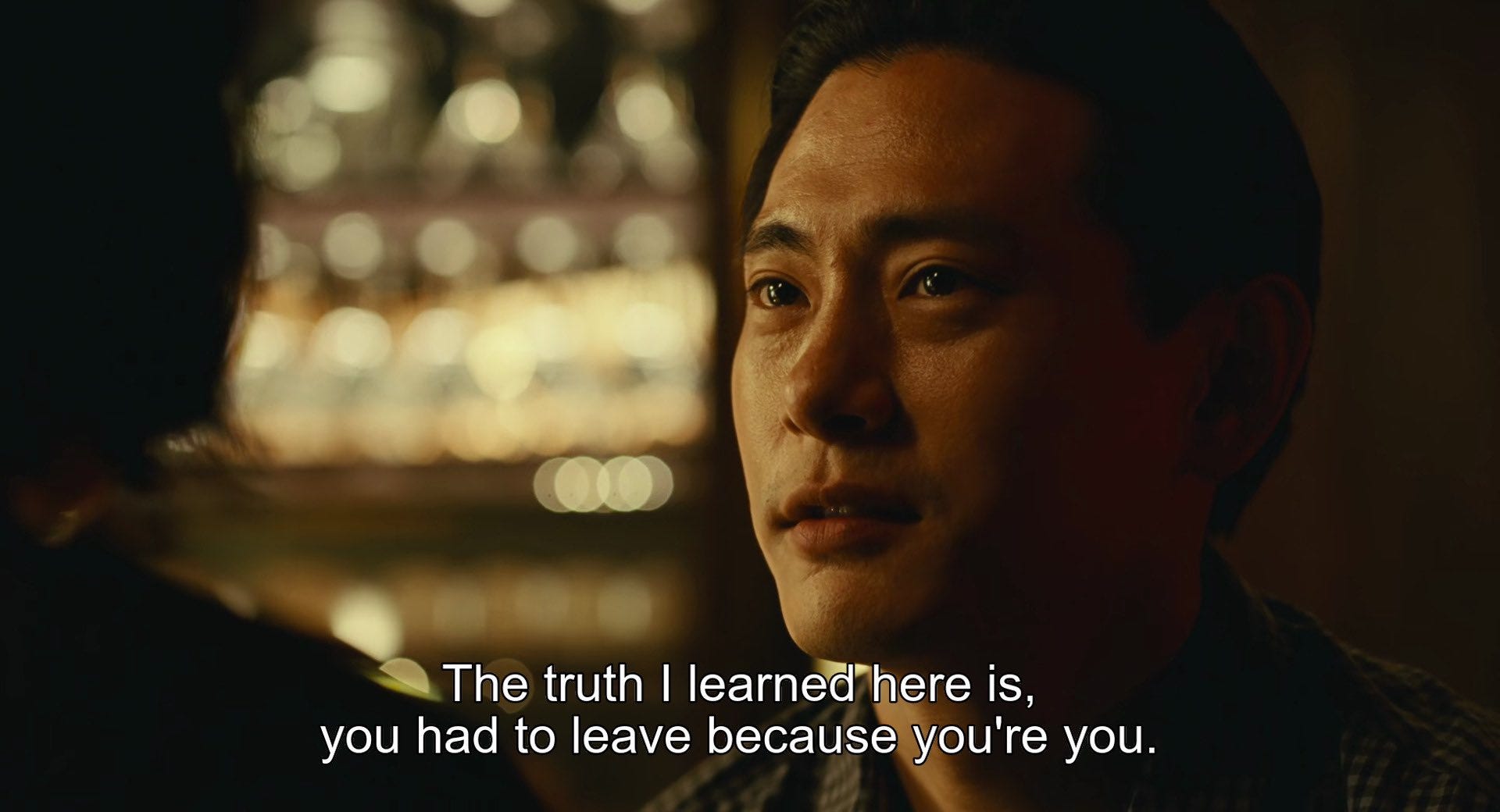
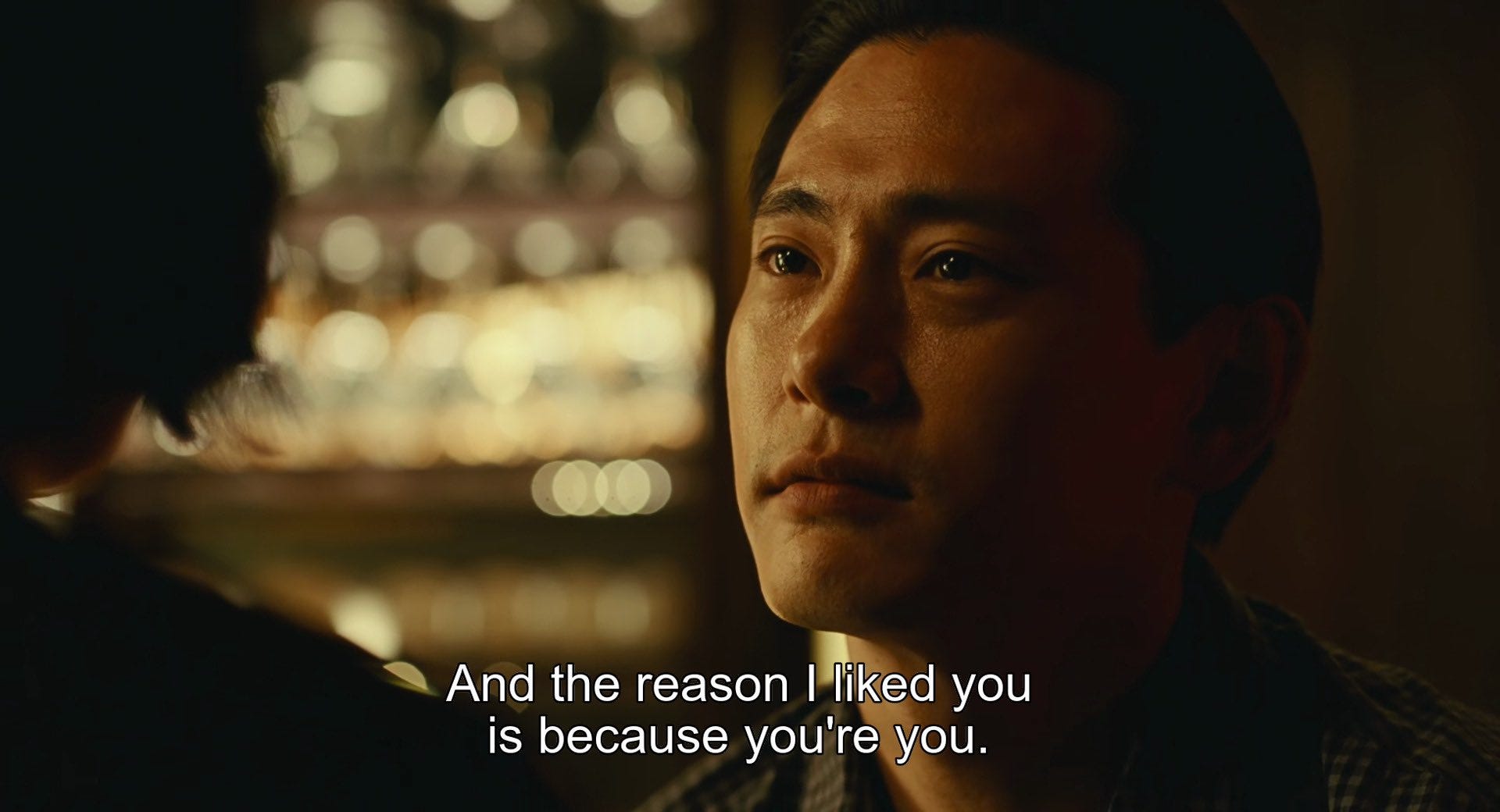
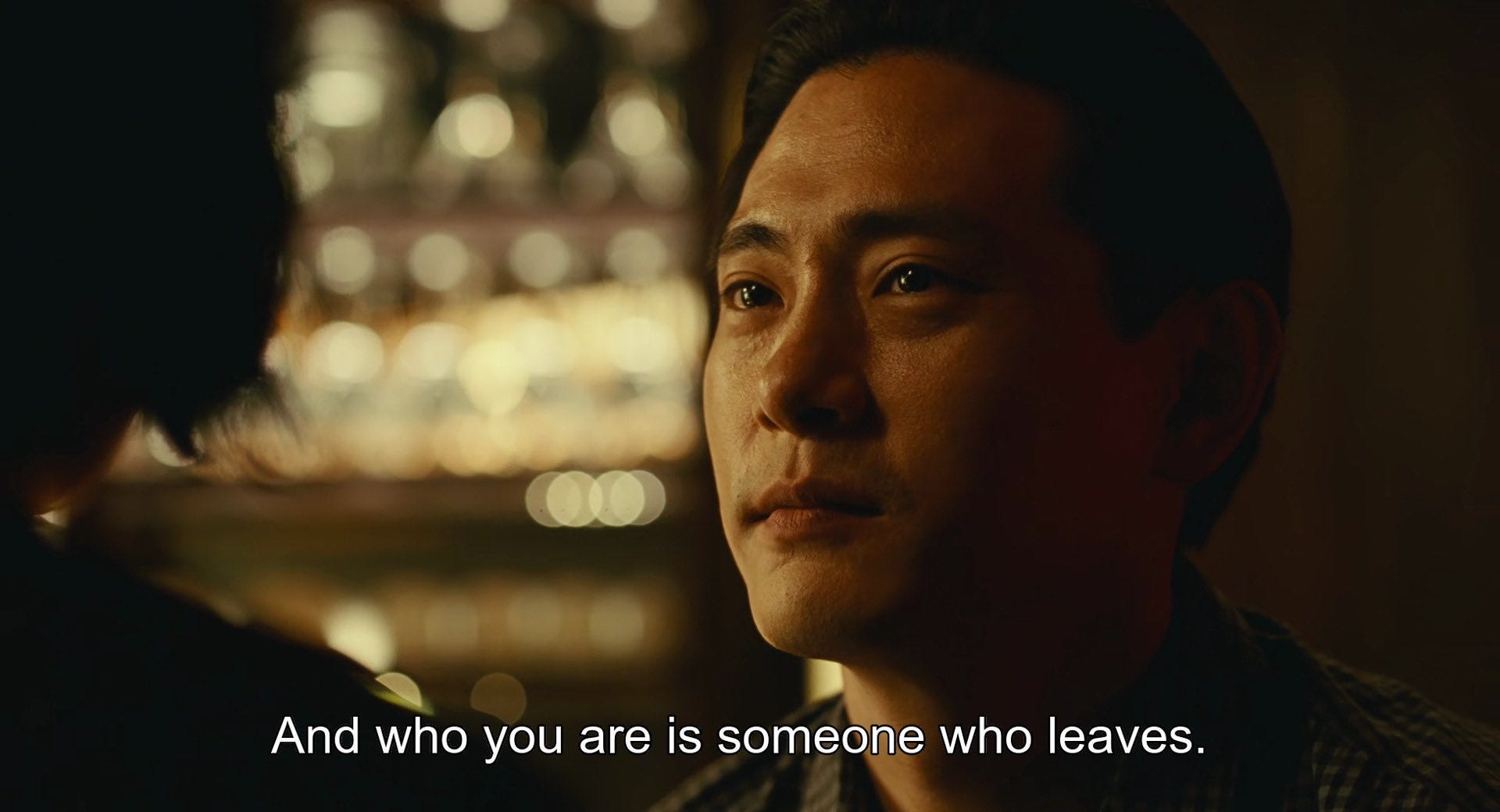
The end of the quote in the picture is something to the effect of, ‘But to him, you're someone who stays’.
Since watching this film, I’ve returned to this idea often – how someone’s capacity to see you unlocks another version or aspect of yourself previously hidden.
For me, I have been playing the role of Resident Reservoir, always ready to hold other people’s burdens and weights. Yet emotionally, I was clogged and unable to release my own issues or let others help steady me. It led me to be frustrated with myself and resent my loved ones because I had unmet needs, and uncommunicated desires. I was tired of being Atlas and holding up the world. All the same, I didn’t have the tools or the knowledge to choose another path.
The Gracious Path Towards Repair
I commend you if you’ve got this far. You may be asking, okay so what now?
I don’t really have all the answers. I do know that with the rise in social isolation, loneliness, and the enmeshment of our digital and physical lives we need authentic and meaningful relationships. We need human-to-human interaction that is gracious, curious, empathetic. Less concerned with agreement, more with understanding.
I believe the reason we place so much emphasis on partnerships is because we have been trained that you can only have that level of vulnerability, emotional witness, and protection within the confines of romance. That simply isn't true. We should be practising a deep sense of kinship with our friends, our neighbours and community members.
However, to do this requires a level of effort; it requires you to see a person beyond how they currently function in your relationship. Less of what they bring to the table and more about how they see the world, and who they are to the people that know them. To do this will also require a level of compassion both for self and others. You will have to allow people to evolve and change, allow them to be whatever the current season of life is shaping them into. Human beings aren’t robots; we aren’t fixed or binary. We are always in flux.
Relationships that survive rupture, change and even tragedy require something of us: a willingness to sit with discomfort, grief, and uncertainty – without rushing to push it away. We must dissociate discomfort from a feeling of lack of safety, and grief from utter despair.
It requires Love. Real Love (word to Mary J Blige), the kind that seeks the highest good of the other – both in will and in action. For many of us, this kind of love feels unattainable: we feel unworthy of it, but we are.
I believe that there is a kind of love that has never stopped looking (out) for me. Even when I couldn't see it, or when I outright refused it. For me that’s God. For you it may be your family, your lover, your best friend.
I'm simply astounded by the level of intentionality, care and precision that God has shown me, with little to no return for Godself.
I have friends who also mirror this kind of divine love, so I know that it is also tangible. I aspire to continue to show up in the world with this as the model and the mark.
That being said, Mary Oliver asks us this: “Tell me, what is it you plan to do with your one wild and precious life?”.
May I suggest this: you love.

